Across Generations:
Hosted by Sylvia Beckerman alongside a co-host from a different generation, The Women's Current explores power, identity, aging, visibilty, and change.
New York Times Bestselling author Joyce Maynard’s latest novel How the Light Gets In is a story of family dynamics. Marriage, divorce, motherhood, raising children and letting go and the realization that ‘We don’t tell our children who they should be. They tell us who they are and what they believe. And it may not always be what we want to hear.’
Christine’s dream had come true, she was a dancer, the ‘Third Girl from the Left’ in the cast of the Tony Award-winning show A Chorus Line, first in London and then Broadway. Unfortunately it was the early 1980s and the onset of the AIDS epidemic. A conversation with Christine Barker, author of Third Girl from the Left, her story of what life was like for her, a young woman having to make impossible choices. Her start in New York, her dream job, and eight shows a week. In the middle of it all was the AIDS epidemic and its impact on those around her affected by this unknown. Among them was her brother Laughlin. Christine’s choice was to take care of her dying brother and others she was close to. When asked why she wanted to write this, Christine answered ‘Because sometimes the story is all that is left.’
Christine retired from her theater career and has turned her sights to another dream – writing. She holds an MFA in Writing from Sarah Lawrence College. She is currently working on her next project.
This week an eye-opening conversation with beauty journalist Jessica DeFino. Beauty standards have an impact on our lives, often without us even realizing it.
‘The beauty industry reels us in by calling it ‘beauty’ and assigning it metaphysical powers. I really think we would be better off if we called the beauty industry the appearance industry.’
Joining the 2024 Paris Summer Olympics and the Flame Bearers, celebrating women athletes changing the Sports Industry. This year is the first Olympics with gender parity. And it’s only fitting to have a conversation with Jamie Mittelman, Founder of Flame Bearers. Jamie doesn’t want to tell the stories of these trailblazing female athletes. No, she wants to empower these women to share their stories by telling them in their own words.
Media coverage of women athletes represents just 15% of sports coverage. Of that 15%, the majority ‘look just like me’ as Jamie says…white and able-bodies from the global north. Jamie and Flame Bearers is on a mission to change that by also telling stories of brown and black, LGBTQ, and women and girls with disabilities. Providing diverse role models so that little girls know that they can do it too. The first media production company dedicated to ‘elevating the best women athletes in the world’, Flame Bearers has worked with over 135 Olympians and Paralympians from 65 countries.
Maryjane Fahey is aging Imaginatively & Unapologetically. Founder of GLORIOUS BROADS, Maryjane defines a Glorious Broad as independent, unconventional and fearless. She’s a woman who is funny, has had a few ‘restarts’ over the years and likes her wrinkles. A woman who is proud of her age and who’s not done yet.
Our conversation covers everything from living life on her own terms, why GLORIOUS BROADS, the women who inspired her, sex at 60+ and more. Maryjane’s motto: ‘It’s never too late.’
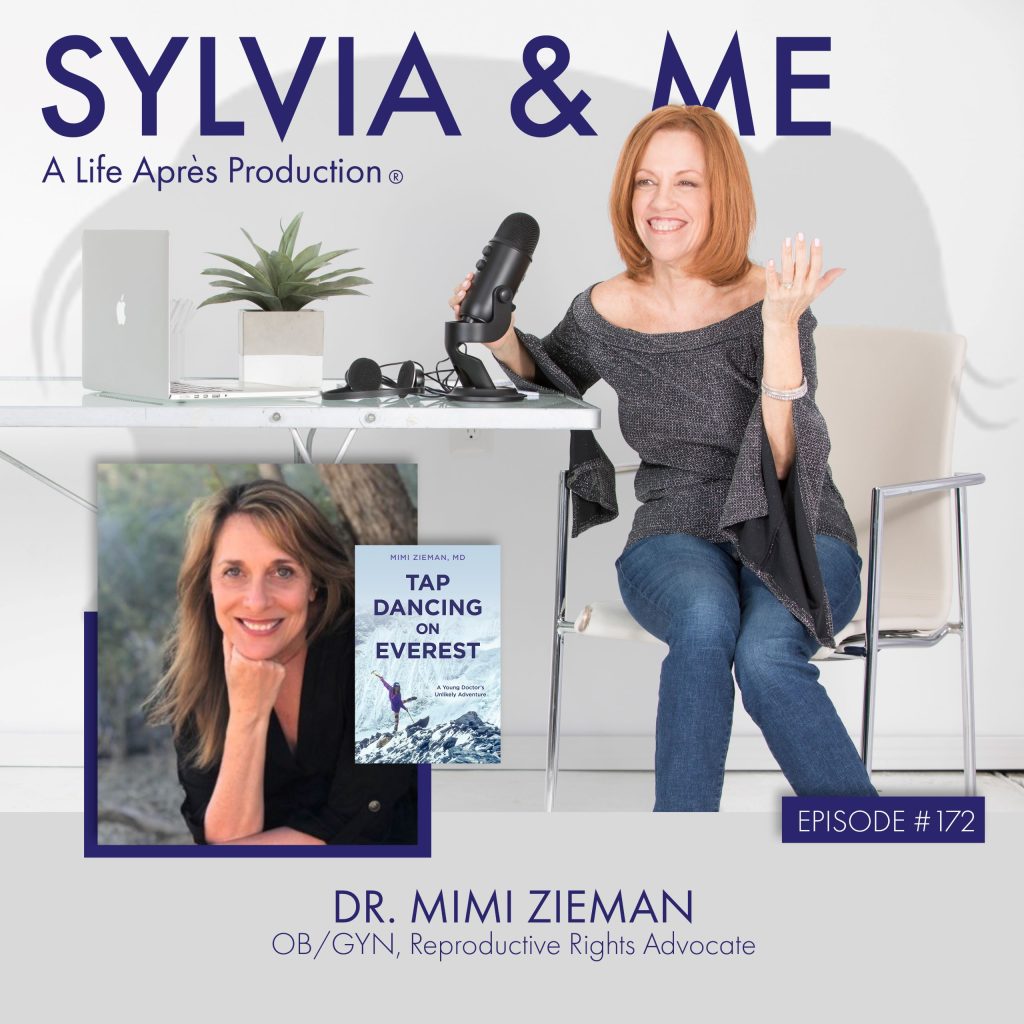
Taking risk as a path to grow is exactly what Dr. Mimi Zieman believes and did. In her memoir Tap Dancing on Everest: A Young Doctor’s Unlikely Adventure, Mimi takes us through her journey. As a 3rd year medical student Mimi joined an expedition attempting a new route on the East Face of Mt. Everest as the doctor. Mimi would be the only woman.
A conversation about a coming of age story and the risks we take to become our truest selves. A child of immigrants, her father a Holocaust survivor, Mimi delves into the struggles she faced as a young woman. She is candid about her eating disorder, feeling small and how tap dancing helped her find her voice.
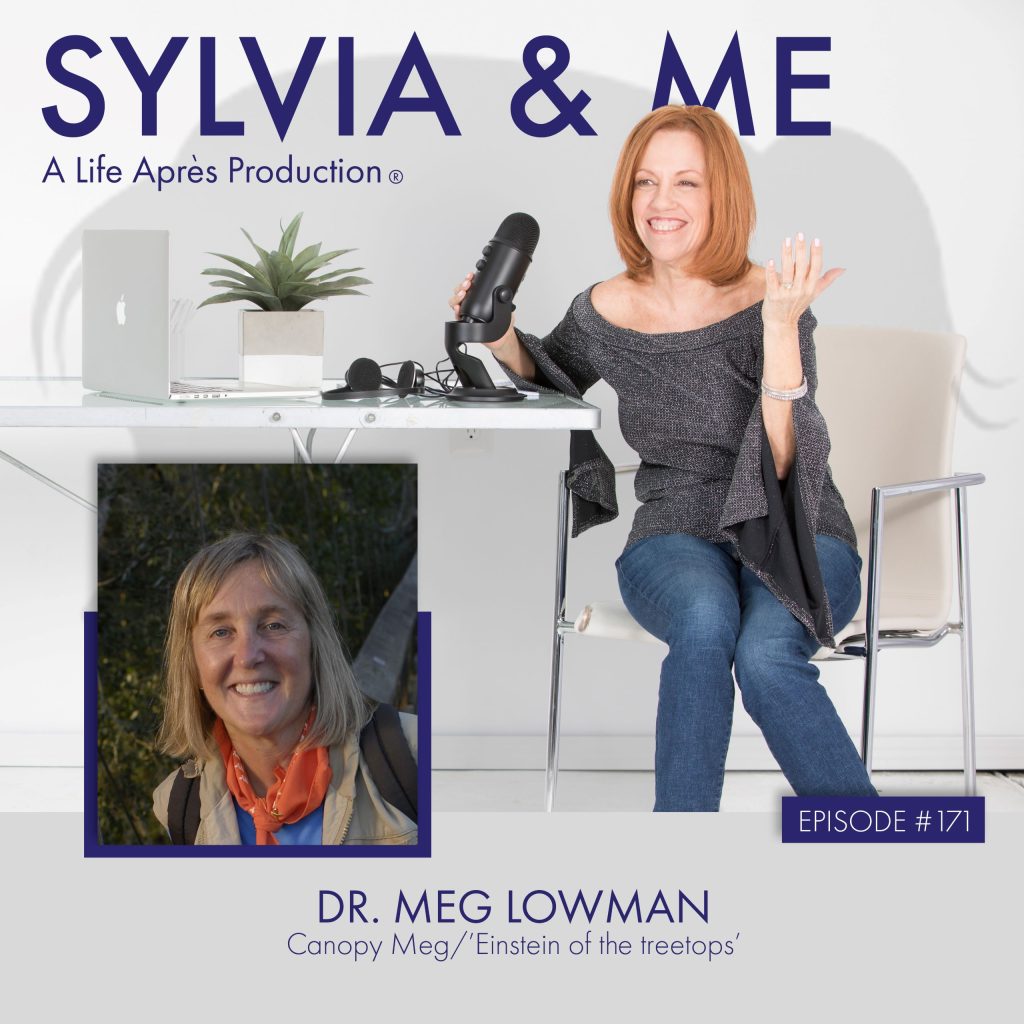
This week, I had the privilege of engaging in a fascinating conversation with Dr. Meg Lowman. Known as “Canopy Meg,” she is a globally-renowned forest canopy scientist. The Wall Street Journal dubbed her the “Einstein of the treetops”. Meg has dedicated her life to the conservation of trees and forests worldwide.
A pioneer in forest canopy ecology, Meg has conducted extensive research in forests spanning 46 countries across all seven continents.. Her work has earned her the title of one of the world’s foremost “arbornauts” — individuals who study the intricate ecosystems of forest canopies. Meg refers to them as the Earth’s “eighth continent.”
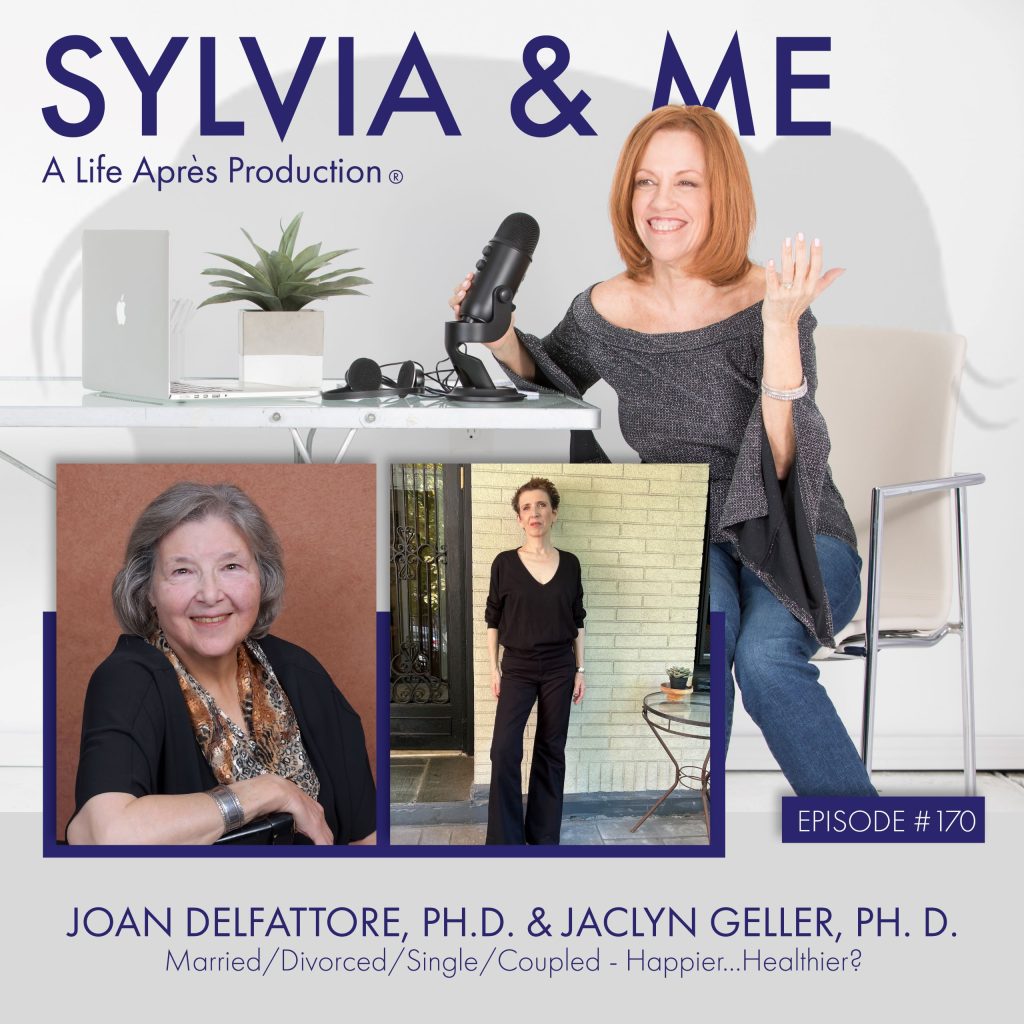
Health or happiness – why do we assume married people are healthier and happier? Pro-marriage and haves and have nots – let’s get into this. Where is the raw data? What was the control group? The promise that marriage is a happy place – is that reality? Are marrieds healthier?
I needed to bring back and bring together two women, Jaclyn (Jackie) Geller, Ph. D. and Joan DelFattore, Ph. D. Jackie is an expert in the field of marriage research and marriage history. Joan is a retired professor and single by choice.
The hidden children of the Holocaust was a story that author Jennifer Rosner had not heard about. In her latest novel ONCE WE WERE HOME, she tells their story. Throughout her journey, she became captivated by the intricacies of finding a sense of belonging and identity. Jennifer encountered a woman who worked on a post-WW2 mission to recover Jewish orphans hidden in Christian settings for safety. Jennifer’s exploration of this lesser-known aspect of history highlights the moral complexities of displacing children who had already endured the trauma of losing their original families.
A Missouri girl in a New York world is slaying dragons. Susan L. Combs, author and founder of “Pancakes for Roger” is on a mission. This week a conversation with Susan and ‘Pancakes for Roger: A Mentorship Guide for Slaying Dragons’. With a drive to ‘Do more, better’ we discuss the three facets of life that her late father taught her: 1. The person you’re with 2. The thing you do for a living and 3. The place you live. And the lessons she learned from her Midwestern upbringing to the two-plus decades in New York City. Susan reminds us that it’s the little things in life that can make a huge impact.